

Photo by David Levêque on Unsplash
- ⭐ Apple AirPods Pro 2 — the AI feature that quietly lowers music when you start talking is the rare AI gimmick that actually works, $249
- ✅ Best for: iPhone owners who want AI that stays invisible instead of demanding voice commands
- ❌ Skip if: You're on Android or Samsung — the ecosystem lock-in below applies to you too
- 💰 Check price on Amazon →
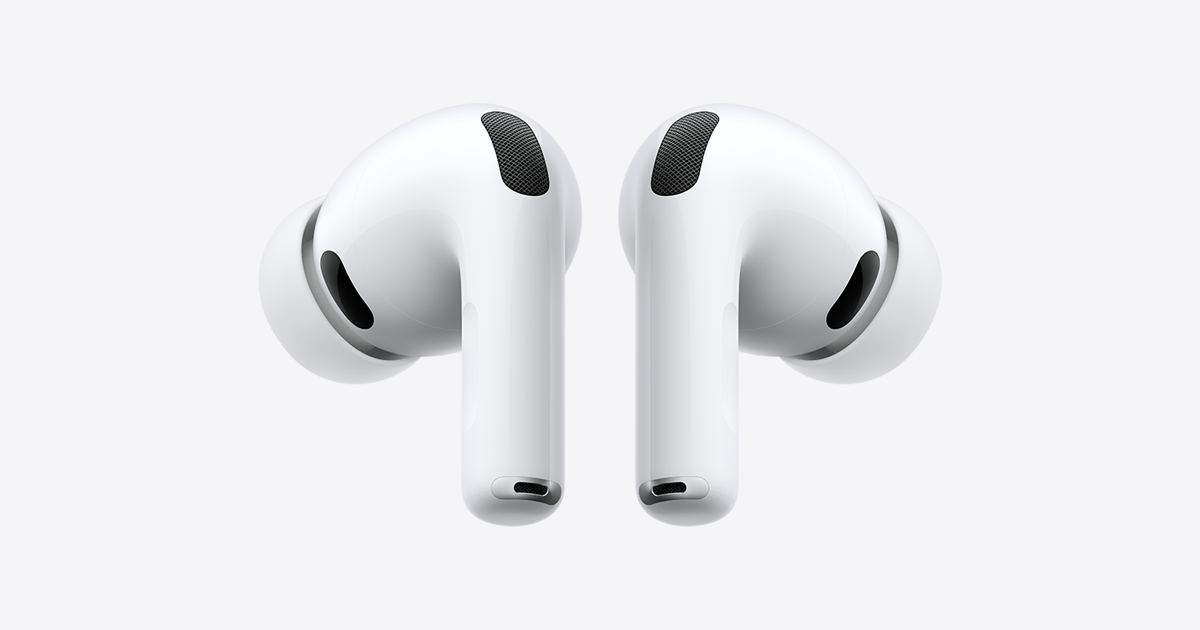
Image: apple.com — © manufacturer (official product image)
What's on the Table: Five AI Earbuds Worth Comparing
$64.9 billion. That's where Grand View Research projects the global wireless earbuds market to land by 2027, growing at an 8.5% CAGR — and as of July 23, 2026, AI features are the single biggest reason buyers are paying $50 to $100 more per pair than they did three years ago. According to AI Fallback, the five earbuds actually worth putting on that shortlist right now are the Apple AirPods Pro 2 ($249), Sony WF-1000XM5 ($299), Bose QuietComfort Ultra Earbuds ($299), Nothing Ear ($149) and Nothing Ear (a) ($99), and Samsung Galaxy Buds2 Pro ($229). Each claims some flavor of machine-learning smarts — adaptive noise cancellation, spatial audio, on-device translation — but the honest answer is that not all of it is worth paying extra for.
Side-by-Side: How They Differ
Price is the first fork in the road, and it's a wide one. Nothing Ear (a) undercuts the Sony and Bose flagships by $200, which matters more than most spec sheets let on.
Chart: Retail prices for the five AI earbuds compared, as of July 23, 2026.
SoundGuys, reviewing the Sony WF-1000XM5, found that its Auto NC Optimizer recalibrates noise cancellation every single time the earbuds go back in your ears — unlike rivals that need a manual reset. The Verge takes a different view on the top overall pick, praising AirPods Pro 2's Adaptive Audio for automatically dropping music volume the instant it detects you speaking, a trick SoundGuys says Sony simply doesn't do. That's the divergence worth noting: The Verge crowns AirPods Pro 2 best overall for ecosystem integration, while SoundGuys gives Sony the nod for raw ANC and audio quality. Neither is wrong — they're measuring different things.
The AI Feature Actually Worth Paying For
"The real value of AI in earbuds isn't just noise cancellation — it's contextual awareness. Adaptive audio that knows when you're in a meeting versus on a train is a game-changer," says Chris Welch, The Verge's audio reviewer. That's the feature to prioritize: software that reacts to your environment without you touching anything. Translation is a different story. "AI translation features are still nascent. They work well for simple phrases but struggle with complex conversations or heavy accents. The technology needs another 2-3 years to mature," according to Brent Butterworth, senior editor at SoundGuys — a caution worth applying directly to Nothing's ChatGPT integration and Samsung's Bixby-powered translation on the Galaxy Buds2 Pro.
CNET calls Nothing Ear's ChatGPT integration the AI earbuds category's best value at $149, partly because CNET found it can handle basic queries offline using on-device processing rather than requiring a live connection. TechRadar disagrees, reviewing the Bose QuietComfort Ultra Earbuds and separately dismissing AI features across the budget tier as "gimmicky," recommending standard non-AI models instead for buyers who don't need the extras. Tom's Guide adds a practical warning for Samsung shoppers: Galaxy Buds2 Pro's real-time translation only works with Samsung phones running One UI 5.0 or later, which is ecosystem lock-in dressed up as a feature. And on battery life, the marketing and the measurements don't match — Sony states 8 hours with ANC on, but SoundGuys and RTINGS consistently measure 6 to 6.5 hours in real-world AI-heavy use, a gap that shows up across the whole AI-earbuds category, not just Sony.

Photo by Ana Achim on Unsplash
Honest Pros and Cons
The upside is real: AI-powered ANC can cut ambient noise by up to 40dB, versus roughly 30dB on non-AI models, and that difference is audible on a plane or subway. The downside is battery math — AI-enabled earbuds run 5 to 8 hours per charge against 6 to 10 hours for standard models, because all that processing has to run somewhere. Bose's Immersive Audio, per TechRadar, also requires specifically optimized content and doesn't work across every streaming service, so the spatial-audio pitch doesn't always deliver in practice.
Which Fits Your Situation
For most people already inside Apple's ecosystem, the AirPods Pro 2 at $249 remain the safest buy — see them on Amazon. Audio purists chasing the best raw ANC performance should look at the Sony WF-1000XM5 on Amazon, the pick SoundGuys rates highest for sound quality. Budget-conscious buyers who just want a taste of AI features without the $250+ price tag should consider the Nothing Ear (a) on Amazon at $99, or step up to the Nothing Ear on Amazon at $149 for the fuller feature set. Samsung households should go with the Galaxy Buds2 Pro on Amazon — but only if every phone in the house runs One UI 5.0+, per Tom's Guide's findings. And anyone chasing spatial audio for movies and games can check the Bose QuietComfort Ultra Earbuds on Amazon, with the caveat that TechRadar found Immersive Audio doesn't work with every streaming app. Skip the AI premium entirely if you mainly listen to podcasts and don't care about noise cancellation — a standard non-AI model will save you $50 to $100 without costing you much in daily use.
Pricing and Where to Buy
As of July 23, 2026, prices across the lineup run from $99 for the Nothing Ear (a) up to $299 for both the Sony WF-1000XM5 and Bose QuietComfort Ultra Earbuds, with AirPods Pro 2 at $249 and Galaxy Buds2 Pro at $229 sitting in between. U.S. wireless earbuds shipments reached 76.8 million units in 2023, up 7.2% year-over-year, and the premium $200-plus segment grew 12.4% — a sign that buyers are increasingly willing to pay for the AI tier rather than settle for basic Bluetooth audio. The main pick to start with: AirPods Pro 2 — Check Current Price.
Frequently Asked Questions
Are AI earbuds worth the extra cost?
For most people, yes — but only for the contextual features (adaptive volume, environment-aware ANC), not translation, which Brent Butterworth of SoundGuys says still needs 2-3 more years to mature. The catch is that AI processing shortens battery life to 5-8 hours versus 6-10 hours on standard models, so weigh that tradeoff against how much you actually use the AI extras.
What is the difference between AI noise cancellation and regular ANC?
AI-powered ANC can reduce ambient noise by up to 40dB compared to roughly 30dB on non-AI models, largely because systems like Sony's Auto NC Optimizer recalibrate to your ear shape and environment every time you put the earbuds in, per SoundGuys' testing — instead of using one fixed noise profile for everyone.
Which earbuds have the best AI translation features?
Nothing Ear's ChatGPT integration and Samsung's Bixby-powered translation on the Galaxy Buds2 Pro are the two main options, but CNET and Tom's Guide both flag limitations — Samsung's translation only works with Samsung phones on One UI 5.0+, and translation across the category generally struggles with complex conversations or heavy accents.
Do AI earbuds work with all smartphones?
Basic playback and ANC work across iOS and Android, but the AI features often don't. Samsung's real-time translation is locked to Samsung phones running One UI 5.0 or later, per Tom's Guide, and Apple's Adaptive Audio is tuned specifically for the Apple ecosystem — check compatibility before buying if translation or adaptive features are the reason you're upgrading.
How does Adaptive Audio compare to regular transparency mode?
Regular transparency mode is a fixed on/off setting. Apple's Adaptive Audio, per The Verge's Chris Welch, dynamically blends noise cancellation and transparency using machine learning and can automatically lower music volume the moment it detects you speaking — a level of contextual awareness that fixed transparency modes don't offer.
Bottom Line: On balance, the data points toward a simple rule: pay for AI earbuds when the AI feature is passive and contextual — adaptive volume, environment-tuned ANC — and skip paying extra for AI that requires you to actively talk to it, since translation quality still lags the marketing across every brand tested here. The most likely outcome as competition tightens through 2027 is that these contextual features trickle down into cheaper models, which is exactly why the $99 Nothing Ear (a) already looks like the category's smartest value play rather than its cheapest compromise.
Disclaimer: This article is editorial commentary based on publicly available information and user reports. We earn a small commission on qualifying Amazon purchases at no extra cost to you. Research based on publicly available sources current as of July 23, 2026.