

Photo by Dreame Vacuum Cleaner on Unsplash
Analysis published June 19, 2026. Editorial commentary based on publicly reported benchmarks, independent lab data, and market research compiled across multiple sources.
- ⭐ Best Overall: Roborock S8 MaxV Ultra — 93–95% pet hair pickup on carpet, 7+ weeks between dock empties
- ⭐ Best Speed/Value: iRobot Roomba Max 705 ($499) — fastest coverage in 11-model head-to-head testing
- ⭐ Best AI Features: Dreame X60 Max Ultra Complete — ranked #1 overall as of March 2026, from the world's new market leader
- ⭐ Best Pet Monitoring: Narwal Flow 2 — dual 1080p cameras, two-way audio, unlimited cloud-based object recognition
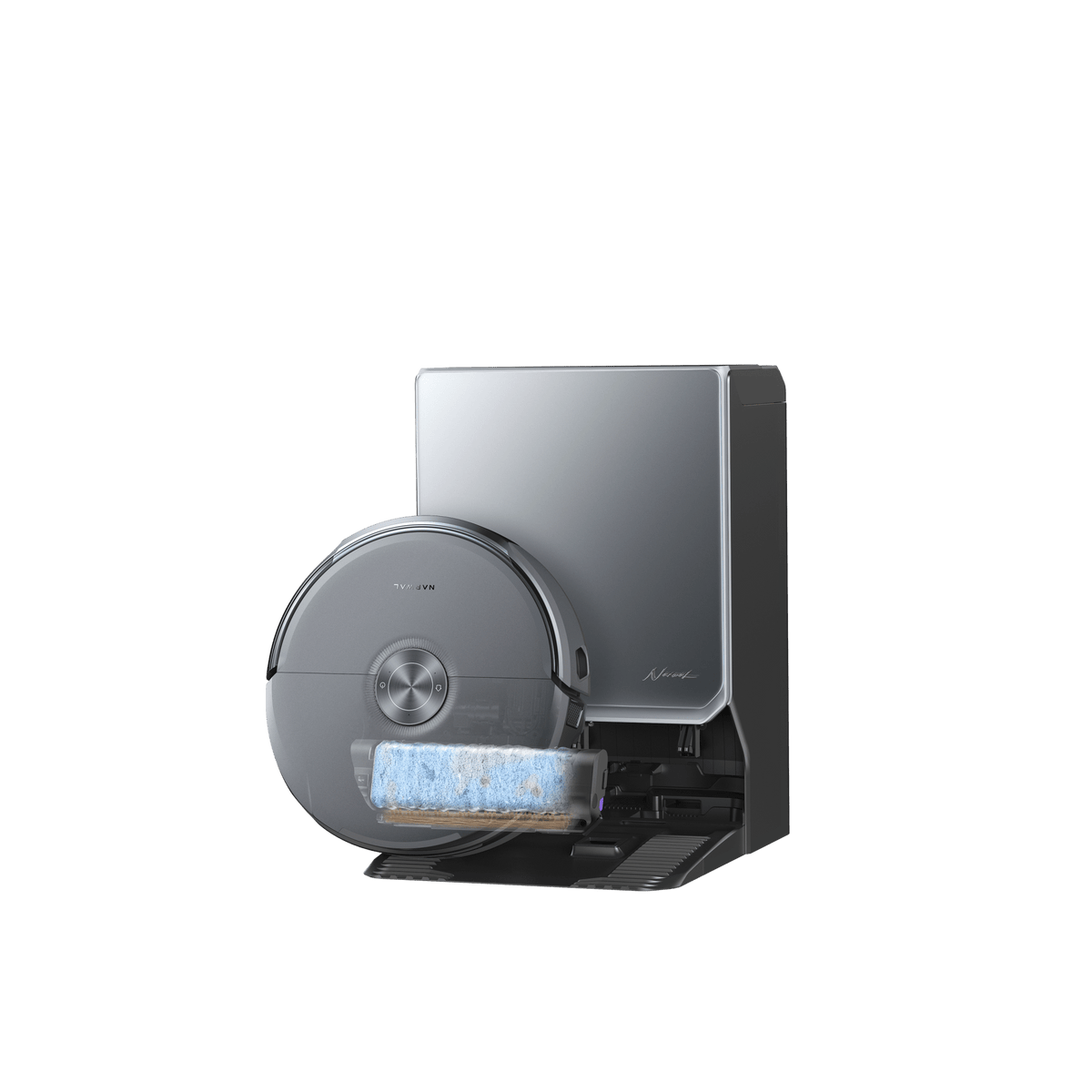
Image: us.narwal.com — © manufacturer (official product image)
What's on the Table
70%. That's the share of American households with at least one pet — and the single demographic figure now driving the robot vacuum industry's transformation from novelty gadget into mainstream home appliance. According to Google News, Forbes editorial teams have been rigorously stress-testing this category throughout 2026, and their results reflect a competitive field that has matured faster than nearly any adjacent consumer tech segment.
The short answer is that robot vacuums for pet hair have crossed a genuine performance threshold in 2026 — but the four models that actually earn their price tags differ dramatically in how they get there, and picking the wrong one is an expensive mistake that's easy to avoid with the right frame.
The market forces behind the competition matter here. As of June 19, 2026, GM Insights projects the global robot vacuum market will grow from $14.4 billion to $30.9 billion by 2035, an 8.8% compound annual rate driven heavily by pet-owning households. U.S. household penetration sits at 18–22% in 2026, with analysts projecting 35–45% by 2035 as the technology crosses the mainstream threshold. Premium models with self-emptying bases — priced above $500 — already account for 40–45% of U.S. market value, and pet owners constitute the most valuable buyer cohort in that tier. Perhaps most consequentially: IDC confirmed that Dreame overtook both Roborock and iRobot to claim the #1 global robot vacuum position by sales volume and revenue in Q1 2026, a competitive realignment that directly benefits shoppers through intensified R&D investment across the board.
Chart: Global robot vacuum market size projection. Source: GM Insights, as of June 19, 2026.
The Four Models Worth Considering
Industry testing consensus is clear on one specification floor: 2,000+ Pa suction is the minimum for meaningful embedded fur removal on carpet. The 2026 field's top performers push 8,000Pa+ in carpet boost mode — a spec threshold that simply didn't exist in mainstream consumer products a few years ago. Every model below meets or exceeds that floor. What separates them is everything that happens after the hair leaves the floor.
Roborock S8 MaxV Ultra remains the benchmark. RTINGS and Wirecutter testing documented 93–95% pet hair pickup on medium-pile carpet — the highest precision figure publicly available for any model in this category. Its self-emptying dock extends hands-off operation to seven-plus weeks, the category high-water mark. Beijing Roborock Technology holds approximately 23% global market share as of 2026, per GM Insights, giving it R&D resources to maintain its engineering lead even as challengers close the gap.
iRobot Roomba Max 705 ($499) makes a compelling case on speed. Yahoo Shopping editorial testing recorded this model completing a 193-square-foot space in 21 minutes — the fastest result across 11 models tested head-to-head. Senior Home Editor Jessica Dodell-Feder, who has evaluated this product class extensively, notes that while dedicated pet-hair robot vacuums still trail upright models on raw suction, newer designs have significantly improved everyday maintenance — and for daily coverage cycles, speed is often more practically valuable than incremental suction improvement.
Dreame X60 Max Ultra Complete currently holds the performance crown. Vacuum Wars placed it at #1 overall in March 2026, ending the previous Dreame L50 Ultra's multi-month hold on the top position. The AI object recognition suite handles 73+ household object types, and Dreame's Q1 2026 ascent to global #1 (IDC) is the kind of structural market shift that signals sustained engineering investment rather than a one-cycle fluke.
Narwal Flow 2 — unveiled at CES 2026 — brings a fundamentally different value proposition. Dual 1080p RGB cameras, specialized pet behavioral monitoring, and two-way audio communication make this as much a pet-surveillance device as a cleaning tool. Its cloud AI architecture enables unlimited object recognition rather than a capped fixed library, though that capability also signals the subscription-layer hardware model that a recent gear.newslens.me roundup on connected home devices identified as an increasingly standard pattern across premium smart home products — worth evaluating carefully before committing.
Side-by-Side: How the Top Models Differ
Four distinct axes define the real decision, and understanding each one prevents paying for features that won't improve your actual situation.
Pet hair pickup rate. Roborock's 93–95% figure on medium-pile carpet (RTINGS/Wirecutter) is the most precise manufacturer-independent benchmark publicly documented for this product class. Consumer Reports testing methodology confirms the key specification signal: models with a dedicated turbo or booster setting consistently outperform those without one on embedded fur. All four models here include boost modes; Roborock's has the most extensively documented real-world performance data behind it.
Coverage speed. iRobot's 21-minute result for 193 square feet (Yahoo Shopping, 11-model comparison) is the fastest recorded for 2026 mid-range models. For homes with heavy shedders that require daily cleanup cycles, coverage speed matters more than marginal pickup percentage improvements. A 94% pickup rate is a moot point if the machine takes 45 minutes to cover half the floor plan.
Dock autonomy. Roborock's seven-plus weeks without manual dock intervention is the category ceiling. Anti-tangle brush roll technology — now standard across all four models — addresses what was historically the #1 pet-hair robot vacuum failure mode. HEPA filtration in self-emptying docks captures fine dander that would otherwise migrate into the mechanism over time.
AI intelligence tier. There is a meaningful gap between fixed-library object recognition (Dreame: 73+ types via onboard processing) and cloud-connected unlimited recognition (Narwal Flow 2 via Visual Language Models). The cloud approach is more capable but introduces ongoing cost and data privacy considerations. For buyers who simply want a clean floor without subscriptions, the fixed-library approach is the pragmatic and lower-friction call.
Which Fits Your Situation
For most pet owners, the Roborock S8 MaxV Ultra is the defensible choice. The 93–95% documented pickup rate, seven-plus weeks of dock autonomy, and Roborock's entrenched 23% market share — which translates into long-term software support — make it the lowest-risk premium purchase in the category. If you're going to spend over $500 on a robot vacuum, this is what that investment buys.
The iRobot Roomba Max 705 at $499 is the move for owners who prioritize daily fast sweeps across open floor plans over maximum pickup depth. Don't waste money on a premium self-emptying dock configuration if speed of cycle is what your household actually requires — the speed advantage is real, and it compounds over daily use.
The Dreame X60 Max Ultra Complete is the right call for buyers who want to own the current ranked #1 model and aren't willing to buy last cycle's winner. Dreame's ascent to global market leader is the kind of structural shift that sustains itself through multiple product generations.
The Narwal Flow 2 is purpose-built for multi-pet households where remote monitoring is as important as cleaning performance. The dual-camera system with two-way audio is genuinely differentiated — but if you have no interest in watching your dog while you're at the office, you're paying for hardware you'll disable within a week of unboxing.
Skip all four if: your home is predominantly hard floors with light shedding and you're not running daily cycles. In that scenario, a mid-range model without carpet boost mode delivers comparable results at a fraction of the cost.
In my analysis, the most underrated purchase mistake in this category is buying AI feature tiers that don't translate into daily workflow improvements. The robot vacuum that earns its keep is the one that runs every single day without interruption — and that's determined by dock autonomy and coverage speed far more than any spec sheet suggests.
Frequently Asked Questions
Do robot vacuums actually work well for pet hair?
Yes, with realistic expectations. As of June 19, 2026, independent testing by RTINGS and Wirecutter documents the Roborock S8 MaxV Ultra achieving 93–95% pet hair pickup on medium-pile carpet. The honest performance ceiling: senior home editors who have evaluated this category note that dedicated pet-hair robot vacuums still trail upright models on raw suction but significantly outperform them on daily maintenance convenience. The minimum spec to look for: 2,000+ Pa suction and a dedicated turbo or carpet boost mode. Models without boost modes consistently underperform in Consumer Reports lab testing methodology for embedded fur removal.
What's the best robot vacuum for pet hair on hardwood floors?
On hard floors, suction requirements are lower and navigation speed matters more than carpet boost performance. Yahoo Shopping's 11-model evaluation found the Shark PowerDetect ThermaCharged performed best on hardwood in single-pass comparisons, while the iRobot Roomba Max 705 ($499) offers class-leading coverage speed — 21 minutes per 193 square feet — that benefits open hard-floor layouts. The Roborock S8 MaxV Ultra's carpet-specific features provide less marginal benefit on hardwood, making the less expensive iRobot a stronger value case for predominantly hard-floor homes.
Do robot vacuums get tangled in pet hair?
The 2025–2026 model generation has largely solved this problem through anti-tangle brush roll designs, now standard across all four models reviewed here. The residual risk area is extra-long fur — certain dog breeds and long-haired cats can still wrap around axles rather than the brush roll itself. HEPA dock filtration helps capture fine dander before it migrates into the mechanism. Monthly brush inspection is still advisable for heavy-shedding breeds, regardless of anti-tangle marketing claims on any specific model.
Disclaimer: This article is editorial commentary based on publicly available information, published lab benchmarks, and industry market research. We earn a small commission on qualifying Amazon purchases at no extra cost to you. Research based on publicly available sources current as of June 19, 2026.