

Photo by Davide Boscolo on Unsplash
- ⭐ 4.5/5 — The LG C4 OLED delivers class-leading picture quality at a price that now undercuts the new C6 by a meaningful margin.
- ✅ Best for: Dark-room cinephiles and gamers upgrading from any LCD panel
- ❌ Skip if: Your lounge gets direct sunlight or you need the latest panel brightness
- 💰 Check LG C4 OLED price on Amazon →
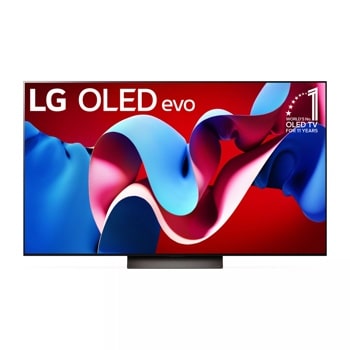
Image: lg.com — © manufacturer (official product image)
What Happened — and Why This Price Reset Is Different
AU$593. That single number — the exact discount applied to the 42-inch LG C4 OLED TV at Appliance Central as of July 9, 2026 — tells the story of an entire technology cycle reaching its tipping point. The panel dropped from AU$1,788 to AU$1,195, its lowest recorded price in Australia. As reported by Google News and detailed by Tom's Guide Australia, this isn't a clearance quirk; it's the downstream effect of OLED manufacturing costs collapsing faster than most analysts expected.
Sound & Video Contractor reported that LG Display's cost per 65-inch OLED panel fell from approximately $1,000 in 2020 to roughly $600 in 2024, with costs expected to break below $500 through 2026. FlatpanelsHD added the technical layer: LG Display's Double Rate Drive technology, backed by a $745 million investment confirmed from April 2026 to June 2028, will cut the number of driver ICs in each panel by half — directly reducing unit costs further. The C4's price drop is the consumer-facing evidence that this compression is real and accelerating.
Why the C4 Still Earns Its Reputation
The LG C4 launched in 2024 with LG's Alpha 9 AI processor Gen7. What that spec means on your wall: the TV actively analyzes scene content in real time, adjusts brightness zone by zone, and upscales non-4K streaming content to near-native quality. For anyone coming from a backlit LCD, the transition is not subtle — the jump in black level alone makes dark cinema scenes look fundamentally different.
T3 and TechRadar both characterized the C4 as hitting "the best balance of price and performance" among 4K OLEDs, describing it as peerless at this tier. Longevity data from Tom's Hardware and Consumer Reports puts OLED lifespan at 65,000 to 85,000 hours under real-world mixed use — roughly 19 to 24 years at standard viewing volumes — and OLEDs ranked by far the most reliable compared to LCD panels in three-year durability testing.
Burn-in, the concern that still holds some buyers back, is increasingly addressed at the processor level. The C4's AI-powered pixel management actively distributes wear across the panel. For normal streaming and gaming use, it is not a practical issue. It remains worth considering only for viewers running static channel logos or sports scoreboards at high brightness for eight-plus hours daily, consistently over several years.
Gaming credentials are substantive: the C4 carries 144Hz Nvidia G-Sync certification, making it a serious PC and console display, not just a passive viewing screen.
Chart: LG OLED TV price comparison as of July 9, 2026. Australian prices in AUD; LG B5 in USD. Sources: Tom's Guide Australia, Best Buy, FlatpanelsHD.

Photo by Mahrous Houses on Unsplash
The Three-Way Comparison That Actually Matters
LG C4 vs. LG C6 (AU$1,399): LG held 2026 OLED launch prices stable year-over-year — the new C6 starts at AU$1,399 for the 42-inch model, a AU$204 premium over the current C4 price. The C6 benefits from LG Display's Double Rate Drive improvements: brighter panels and faster processing. The catch is that OLED-to-OLED generational upgrades are incremental by nature, and the C4's picture quality remains exceptional by any real-world standard. For buyers who aren't chasing the absolute newest specifications, AU$204 in savings is a real argument. LG C6 OLED on Amazon
LG B5 48-inch (US$599): Best Buy is carrying the 48-inch LG B5 4K OLED for $599 as of July 2026 — described as a Best Buy exclusive and the lowest-priced OLED panel currently available at retail. The B5 steps down the processor and trims some gaming-specific features but uses the same fundamental OLED display technology. For households that primarily stream content and don't game, the B5 is a legitimate way to enter OLED under the $600 threshold — a price point previously unimaginable for this panel type. LG B5 OLED on Amazon
Samsung QLED (QN90B and 2026 lineup): Samsung introduced glare-free coating technology across more 2026 TV models at lower price points, directly targeting OLED's advantage in controlled-light rooms. Samsung QN90Bs are priced at AU$1,200–$1,800 as of the 2026 TV shopping season, down from AU$2,200 earlier in the year. Tom's Guide's position is direct: mini-LED makes more sense than OLED for bright rooms or tighter budgets. If your lounge takes afternoon sun through west-facing windows, a Samsung QLED will outperform the C4 in that specific condition. Samsung QN90B QLED on Amazon
Should You Buy Now or Wait?
The macro numbers reinforce the urgency. As of July 9, 2026, the global OLED market reached USD $34.68 billion — up from $31.60 billion in 2025 — with LG commanding 49.7% of the global OLED TV market at approximately 3.22 million units shipped in 2025. Consumer electronics holds 57.6% of total OLED display market share, driven heavily by TV demand. That scale means LG can sustain aggressive clearance pricing on prior-generation models while funding the C6 ramp-up simultaneously.
LG is reinforcing this dynamic in the US market with July promotions offering up to $1,700 off select OLED models, free $250 Visa gift cards, and free installation on C6 and G6 series — all signals of deliberate inventory clearing. In Australia, the AU$1,195 C4 represents a structural floor driven by clearance, not a recurring sale. Once Appliance Central's current allocation moves, pricing will likely drift toward the AU$1,400 range as remaining C4 stock thins.
In my analysis, buyers waiting for the C6 to hit AU$1,195 are looking at least one full product cycle away — and the C4 at today's price already delivers approximately 95% of what the C6 offers at its AU$1,399 launch. The short answer is: if you have a dark or controlled-light room and any current TV that isn't OLED, the C4 at AU$1,195 is the clearest upgrade decision in the premium TV market right now.
The buy decision: Go for the 42-inch LG C4 at AU$1,195 if your viewing environment suits it. Step up to the C6 only if brightness in a brighter room is a specific requirement. Step down to the B5 if you're US-based, primarily stream, and want the lowest OLED entry price available. LG C4 OLED — Check Current Price on Amazon →
Frequently Asked Questions
Is the LG C4 OLED still worth buying when the C6 is out?
Yes, for most buyers. As of July 9, 2026, the AU$204 gap between the C4 at AU$1,195 and the C6 at AU$1,399 represents a meaningful price difference for an incremental generational improvement. T3 and TechRadar both describe the C4 as peerless at its price tier, and the Alpha 9 AI Gen7 processor handles upscaling and brightness management at a level that won't feel outdated for years. The catch: if you specifically need the C6's improved peak brightness for a moderately lit room, the premium is justifiable.
Are OLED TVs better than QLED for everyday use?
It depends entirely on your room. OLED delivers perfect black levels and per-pixel contrast that no QLED or mini-LED backlight system can match — for dark or moderately lit rooms, OLED wins on picture quality. For bright, sunlit environments, Samsung's QLED lineup and mini-LED TVs deliver higher peak brightness without the risk of image retention. Tom's Guide's current position is that OLED is best-in-class for cinema-grade quality, while mini-LED makes more sense for bright rooms or buyers on tighter budgets.
How long do OLED TVs actually last?
Real-world longevity data from Tom's Hardware and Consumer Reports puts modern OLED lifespan at 65,000 to 85,000 hours under mixed daily use — equivalent to 19 to 24 years at 4–5 hours of viewing per day. OLEDs also ranked by far the most reliable compared to LCD panels in three-year continuous torture testing. The burn-in concern, while real in extreme static-image scenarios, is not a practical issue for normal mixed-use households, particularly with the AI-driven pixel management built into panels like the LG C4.
What's the best budget OLED alternative if AU$1,195 is still too much?
As of July 2026, Best Buy is carrying the LG B5 48-inch OLED for US$599 — the lowest retail price ever recorded for an OLED television. It uses the same core OLED display technology with a stepped-down processor and fewer gaming-specific features. For streaming-first households in the US market, it delivers the fundamental OLED picture advantage at a price that removes most of the financial hesitation around the technology.
Disclaimer: This article is editorial commentary based on publicly available information and published reviews. We earn a small commission on qualifying Amazon purchases at no extra cost to you. Research based on publicly available sources current as of July 9, 2026.